A small software business needs a clear offer and a repeatable way to reach people with the corresponding problem. Publishing more articles or adding an AI label does not establish that connection. A practical plan starts with one audience, shows relevant work and measures whether the resulting conversations match the service.
Choose the problem you want to be known for
Describe the business and the repeated task you help with. “Custom software” is broad; school fee administration, restaurant ordering and retail billing give a prospective client something more concrete to recognize.
For this portfolio, ScholarFlow, DinePulse and Shop Invoices provide distinct examples. A focused offer should explain which of those kinds of problems fits the work you want to attract next.
Build an evidence page before a campaign
A useful project page shows the problem, the user, the workflow and the output. Add existing screenshots, explain your contribution accurately and separate current features from plans. Where a result is measured, state the method and period; otherwise describe the functionality without inventing an improvement percentage.
Make the next step specific: discuss a similar workflow, request a walkthrough or explain the current process. A visitor should not need to interpret an abstract slogan before deciding whether to contact you.
Publish content that supports a buying decision
Choose questions that come up while a client evaluates the work. A school may need to understand fee documents and records. A restaurant may need to understand how an order reaches the kitchen. A buyer considering a mobile app may need a web-vs-Android comparison.
Keep broad educational topics as supporting material. Connect them to the relevant service or project through ordinary links. A collection of unrelated definitions can attract interest without helping the reader understand what you actually build.
Choose a manageable distribution routine
Share the project where the intended audience already discusses the underlying problem. Explain a useful workflow or decision and link to the evidence when it helps. Avoid copying the same promotional sentence into every conversation.
For direct outreach, start with relevance and appropriate permission, not a large list of unrelated recipients. For paid promotion, establish a working landing page and enquiry process before increasing activity. Record what each campaign is trying to learn so the spend has an evaluable purpose.
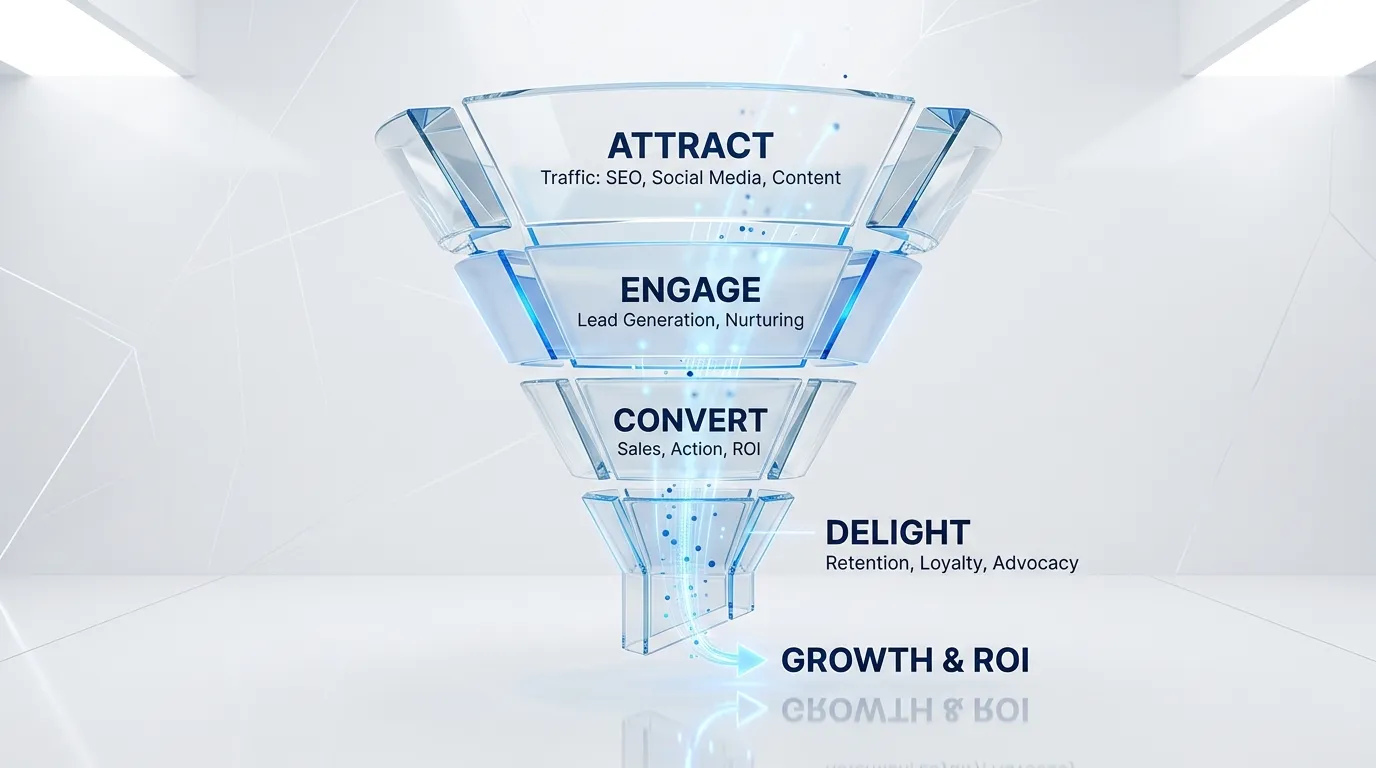
Measure the journey in stages
| Stage | Useful observation |
|---|---|
| Discovery | Relevant query impressions and the pages that appear. |
| Visit | Clicks and the context of the visit, where available. |
| Enquiry | Whether the person described a problem the service can address. |
| Project discussion | Whether the scope, timing and delivery expectations fit. |
| Outcome | A completed project or a documented reason the opportunity did not proceed. |
Search Console reports search visibility and clicks; it does not establish the whole business journey. Match a performance export with your own enquiry notes where possible. Keep the definition of a qualified enquiry consistent between comparisons.
Use a small review cycle
Choose one or two changes to evaluate over a suitable period: a clearer service explanation, a stronger case study or a repaired contact flow. Note the date and check for changes in audience or activity before attributing an outcome to the edit.
With a small site, a handful of visits can change a percentage dramatically. Report the counts behind the rate. Avoid presenting an invented SaaS scenario as a client success story or promising that the same outcome will happen for the next business.
Keep the plan connected to delivery
Marketing should describe the work you can explain and support. If Android is an expanding practice, say that; if the documented projects are web applications, show them clearly. Consistent positioning makes both the portfolio and the first client conversation easier to assess.
Read the local website checklist for service information and contact details, or the SEO checklist for the public-page foundations behind discovery.
Common questions
Should a small software business chase the highest-volume keyword?
Only if the query fits the audience and offering. A broad topic can generate impressions without useful project enquiries.
How should I report a low-volume campaign?
Show the actual counts, time period and definitions. Describe uncertainty instead of presenting a large percentage based on one or two events as an established growth pattern.